
Acer circinatum
Deciduous shrub or tree 5 to 20 ft. tall, native to moist woods and streambanks in the coastal mountains of northern California to British Columbia. Attractive in all seasons: bare reddish twigs in winter, delicate lobed leaves in spring and summer, and good color in autumn. Wonderful in the woodland setting, under tall conifers where its fall color will stand out. A natural with ferns and other woodland plants that receive dappled to part shade and regular to moderate summer water. Can be espaliered too.

Actaea rubra
Native to moist wooded plant communities throughout the Coast Ranges and the Sierra Nevada. The attractive astilbe-like foliage emerges in the early spring. The tiny white flowers have no petals and are made up of clusters of creamy white stamens. The spikes of vivid, shiny red berries are very showy though poisonous - hence the common name baneberry. A wonderful addition to shady situations with some summer water. Goes dormant in the winter. Deer resistant.

Actaea rubra – white fruited form
This is the special white fruited form of the more commonly seen red fruited baneberry. We are not sure how true these will come from seed and suspect there will be some red berries showing up in this crop. So far we have had only white fruits coming from this seed source, but we will have to see how the entire crop develops. Baneberry is a wonderful woodland plant and easy to grow in shady locales with some summer moisture. The foliage is astilbe-like and late spring brings tall flower stems topped with white flowers that have no real petals and are made up of clusters of creamy white stamens. The showy and VERY POISONOUS fruits follow, hopefully in this case white, but may be shiny red. Dies back to the ground in the winter. Deer resistant.

Adiantum aleuticum
Five finger fern provides a delicate, airy, fresh effect in the shade garden. Easy to grow with regular water and humusy soil. Does well in containers too. Fronds form finger-like patterns on handsome black stems up to 1 1/2 feet tall. Somewhat winter deciduous. Combine with wild ginger, redwood sorrel, leopard lilies and sword fern for a handsome woodland garden. Somewhat deer resistant.

Adiantum capillus-veneris
A lacy and delicate looking fern with arching dark stems that carry bright green fan-shaped leaflets. A wonderful addition to a woodland garden or any shady space where it is easy to grow as long as it receives regular water. Lovely in containers or raised beds, on a shady bank or border, along the north side of a building. Can grow as much as 1 1/2 ft. tall and wide. Southern maidenhair can be grown through much of California except for high mountain areas. Goes winter dormant with cold. Somewhat deer resistant.

Adiantum x tracyi
A naturally occurring cross between Western five finger and California maidenhair fern. Offers a delicate lacy effect with gorgeous bright green fronds on black arching stems. One of the parents is winter dormant, the other, summer dormant, with the resulting hybrid being evergreen. Easy to grow with shade, woodsy soil and summer irrigation. Excellent container plant too. Deer resistant.
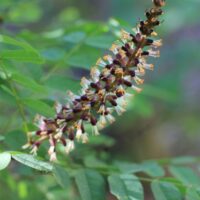
Amorpha californica var. napensis
A lovely and rare native shrub of the pea family, occasionally seen in woodland and chaparral communities in the coast ranges around the San Francisco Bay Area. Offering a delicate, airy quality, this deciduous shrub grows to around 6 ft. tall and wide, though can get bigger in the wild. Intricate flowers are closely set on slender spikes and are made up of tiny, intense indigo-purple petals with protruding bright orange stamens, charming on close inspection. This rare and threatened shrub is the larval food source for the California dogface butterfly, our state insect! Bees and butterflies nectar on the flowers as well. Best in lightly shaded areas with occasional to no summer water needed once established. Deer resistant.
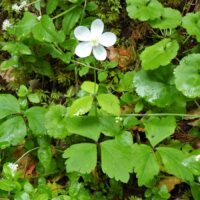
Anemone deltoidea
Rhizomatous perennial native to coniferous forests in the coastal mountains of Northern California through Washington. Forming low colonies, 6 inches or so tall with slender stems holding three leaflets. Simple, pure white flowers with a central shaft of anthers hold themselves just above the foliage. Spreads vigorously and best used with shrubs, ferns or other sturdy subjects. Can romp over smaller perennials. Sweet addition to the woodland garden where it will grow in full to part shade with regular to a occasional summer watering. Good in containers too. Dies back to the ground in winter.
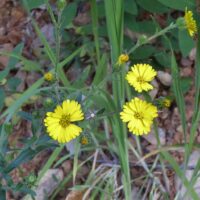
Anisocarpus (Madia) madioides
A quiet perennial, native to woods and coniferous forests of California from sea level to 4000 ft. Dark green, narrow leaves are covered with soft hairs and form a sturdy, low, perennial clump. The bright yellow daisies top 8-10 inch flower stems over a long period, from late spring into summer. Able to thrive in dry shady conditions.May seed about in a friendly way.
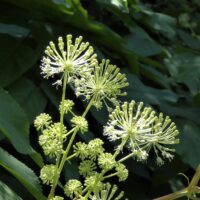
Aralia californica
A striking and dramatic native perennial for shady areas with regular water. The elk clover boasts tropical looking foliage 4 - 8 ft. tall with stalks of white, ball-like flower clusters followed by purple berries. In the autumn the foliage turns yellow and dies to the ground, returning with exuberance in the spring. Birds relish the fruits. Deer resistant.

Aristolochia californica
Dutchman’s pipe vine is an interesting vine native to river, stream side and woodland habitats. Soft heart-shaped leaves and unusual purplish pipe-shaped flowers bloom in early spring. This deciduous twining plant will need some support if you wish it to grow upwards. Adaptable, but best with a little shade and moderate water. Slow to establish, we offer this adage to encourage patience: “The first year it sleeps, the second year it creeps and the third year it leaps”. Once established it will put on ample growth, easily covering a trellis or chain link fence. THE larval food source for the pipevine swallowtail butterfly. Deer resistant.
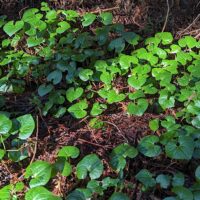
Asarum caudatum
Native to the deep shade of forest floors, this evergreen perennial forms a handsome low groundcover. The large, deep green, heart-shaped leaves appear to hover over the ground, creating a lush, almost tropical effect. The unusual flowers which nestle under the leaves are normally maroon, but occasionally white, with long spidery tails. Thrives in the deep shade under redwoods, competing well with the aggressive roots and dense duff. The ginger scented leaves are deer resistant.

Asarum caudatum ‘Alba’
An interesting form of the native, shade loving wild ginger. Calling the flowers white is a stretch, they are more of a wasabi-green rather than the usual maroon color of the species. The intriguing long tailed flowers are hidden beneath the glossy heart shaped leaves and would need to be planted on a wall, slope or container to make them easier to view. Wild ginger prefers shade and moisture where it will form a low spreading groundcover.
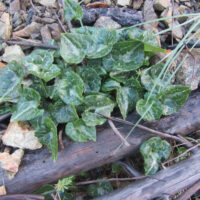
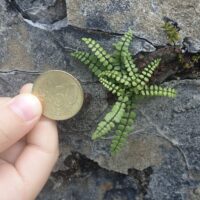
Asplenium trichomanes
This small fern is found in rocky habitats almost worldwide, though uncommon in California, where it is found only in Del Norte County. Tiny, dark green, oval leaves line the black stems of this diminutive evergreen fern. The narrow fronds form short tufts under 8 inches tall that spread slowly. Easy to grow, this little cutie is perfect for tucking into a shady rock garden, wall or container planting. Best in gritty, well drained soils with regular to moderate summer irrigation. Deer resistant.
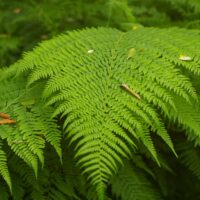
Athyrium filix-femina
Native to much of North America, lady fern grows in moist shady places. The newly emerging fiddleheads in the spring are particularly attractive. The graceful, delicate looking fronds grow 3 foot or more tall by 3 ft. or more wide. Lovely in a forest setting, as a background plant, or around a pond. Goes dormant in the winter. Plant in full to part shade with regular water.
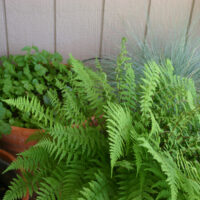
Athyrium filix-femina ‘Minutissimum’
A miniature form of the lovely lady fern, growing up to one foot tall and two feet wide. Forms compact mounds of finely divided light green fronds. Perfect for the small spaces, rock gardens or containers. A vigorous and hardy fern needing only shade and moisture to thrive. Dies back to the ground in the winter. The new unfurling fiddleheads adds charm in the spring. Deer resistant.
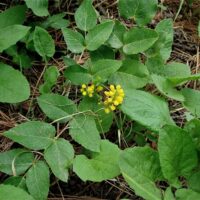
Berberis (Mahonia) aquifolium var. repens
This little cousin of the much larger Oregon grape only gets 1 - 3 ft. tall and spreads underground to create dense, evergreen drifts. The divided leaves have a matte finish with a grey-green color which turns purple-red with frost. Clusters of bright yellow flowers open in spring and are followed by deep blue "grapes" much loved by birds. The sweet-scented flowers are enjoyed by bees and butterflies. Provide full sun to shade and moderate to infrequent irrigation. Deer resistant.
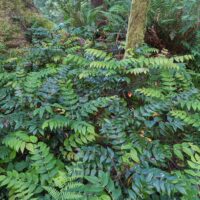
Berberis (Mahonia) nervosa
A handsome species with especially long, leathery, evergreen leaves. Grows to around 2 or more feet tall and spreads by underground stems. Yellow flowers in spring are born in upright clusters, followed by blue berries. Great woodland groundcover for full or partial shade with occasional to regular summer water. Deer resistant. Fruits eaten by robins, finches and towhees. The flowers have nectar for hummingbirds and bees.
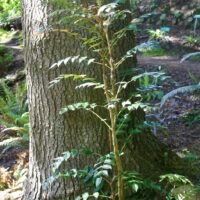
Berberis (Mahonia) nervosa var. mendocinoensis
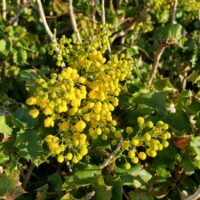
The rare Mendocino longleaf mahonia comes from moist coniferous forests around Fort Bragg. Differs from the more diminutive longleaf mahonia in its unusual size: growing slowly to 5 ft tall or more and spreading to form narrow colonies. The pointed, leathery, deep green leaves, bronzy orange when young, provide a striking contrast to the bright yellow flower clusters produced in the spring. Attractive deep purple berries are a food source for birds. Needs shade and moderate moisture. Deer resistant.
Berberis (Mahonia) pinnata ‘Ken Hartman’
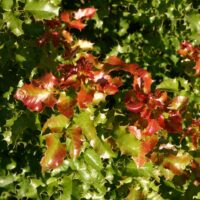
Similar to Oregon grape (Mahonia aquifolium) but leaves are more crinkly and spiny. New growth often shows lots of red and orange. Grows upright to 6 ft. or more, particularly in ideal coastal sites. Handles drought better than the Oregon grape. Tolerates sun to shade. Best with a little shade in hot areas. Fruits eaten by robins, finches and towhees. The flowers have nectar for hummingbirds and bees. Deer resistant.
Blechnum (Struthiopteris) spicant
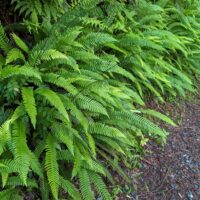
A beautiful and charming fern native to moist coastal forests of northern California. Deep green glossy, narrow fronds are of two strikingly different forms. The outer skirt of fronds is evergreen. The central "fertile" fronds are stiffly erect and airy. It makes for a striking effect. Grows 18" to 2 ft. tall and wide. Best with partial shade to shade and regular moisture.
Boykinia occidentalis
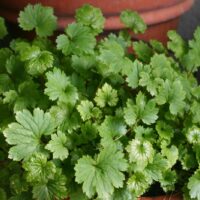
Clusters of dainty white flowers and glossy dark green leaves make the brook saxifrage a wonderful addition to the moist shade garden. Flowers open in the spring on arching stems up to a foot tall. May continue to bloom into autumn. The round, serrated leaves form low mounds up to 2 feet wide. Tolerates heavy soil and may seed around. Will grow in part to heavy shade. Needs regular moisture.
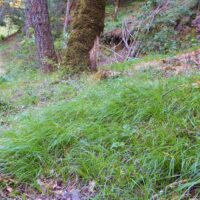
Carex globosa
Here is a sturdy and useful woodland sedge native to well-drained soils in wooded areas. Grows 6 - 12 inches tall and spreads slowly to form bright green tussocks. Useful as a filler among shrubs or trees in filtered shade where it tolerates drought; but some summer water will keep it looking fresh for longer. Great under oaks. Deer resistant.
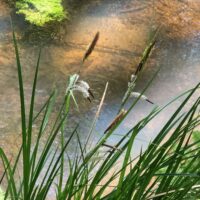
Carex obnupta
From moist coastal sites to shady redwood forests comes this tall sedge, one of the tallest of our native sedges. Spreads vigorously to form dense drifts up to 4 feet in height. One of the more shade tolerant sedges, the slough sedge can grow under the darkness of a redwood canopy but will also accept full sun as long as it has access to moisture. A great plant for naturalizing in moist areas. Used by native peoples for basket making.
Claytonia sibirica
This native perennial with white to pink candy-striped flowers seeks shady, moist conditions. Our form is from Sonoma Coast and has particularly pink flowers. Related to miners lettuce, candy stripe produces dark green, succulent, edible leaves in low rosettes. Blooms over a long period beginning in spring and will frequently reseed. A sweet, spreading, low ground cover for a shady area with regular moisture. A charming and colorful addition to the forest garden, combining beautifully with ferns, wild ginger and false Solomon’s seal.
Cornus sessilis
Native to moist ravines and stream banks of the coast ranges and the Sierra Nevada Mts, this deciduous shrub or small tree grows 5-10 ft. or more tall and wide. Beautiful shiny, jade green leaves with prominent lateral veining decorate the graceful green barked stems. Small, yellow flowers appear early as it leafs out in the spring and are followed by oval fruits. Fruit color changes as it matures from greenish-white to yellow, red and finally shiny black which attract a wide range of fruit eating birds. Foliage can take on pretty tones of yellow and red in the autumn. Thrives in moist shady locations, but will grow well with just part shade and moderate to occasional summer water once established.
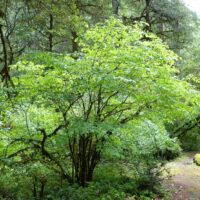
Corylus cornuta ssp. californica
Western hazelnut is a handsome, open, multi-stemmed shrub native to forests from Santa Cruz northwards in the Coast Range, and from Sequoia northwards in the Sierra foothills. Winter deciduous with decorative dangling catkins in winter. The soft, somewhat hairy leaves turn yellow in the fall. Small amounts of tasty nuts are produced in late summer and are relished by wildlife and people. Part shade with some moisture, but will tolerate fairly dry conditions once established. Usually grows 6 - 10 ft. tall. Somewhat deer resistant.
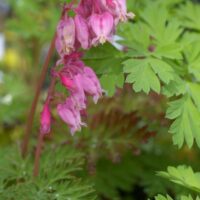
Dicentra formosa
Ferny foliage makes a lacy groundcover in shady areas. Clusters of pendulous, pink, heart-shaped flowers in spring and into summer. Will spread rapidly when happy, enjoying moist but not soggy woodland conditions. Tolerates dry shade where it goes dormant with drought. Early nectar source for hummingbirds and bumble bees. Deer resistant.