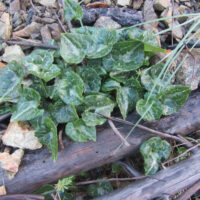
Acer circinatum
Deciduous shrub or tree 5 to 20 ft. tall, native to moist woods and streambanks in the coastal mountains of northern California to British Columbia. Attractive in all seasons: bare reddish twigs in winter, delicate lobed leaves in spring and summer, and good color in autumn. Wonderful in the woodland setting, under tall conifers where its fall color will stand out. A natural with ferns and other woodland plants that receive dappled to part shade and regular to moderate summer water. Can be espaliered too.


Acer macrophyllum
This stately and picturesque tree is native to stream banks and moist canyons from Southern Alaska to the foothills of California. A large, round-topped tree with large dark green lobed leaves and smooth silver-gray bark. Fast growing 30 ft or more tall. One of the few native trees to offer good fall color. Sun to partial shade, occasional to regular water. When planting in a sunny location, protect the trunk from sun-scald with a dilute application of white latex paint.
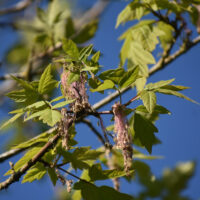
Acer negundo var. californicum
The box elder at maturity features a broad canopy supported by thick branches and a wide, gray trunk. In spring, the silky pink inflorescences hang from the tips of the branches as the leaves begin to emerge. Quickly grows to a height and width of up to 50 ft. Often used as a restoration plant in riparian zones. Full sun to part shade. Enjoys regular moisture. Deer seem to leave it alone once established.

Achillea millefolium ‘Sonoma Coast’
This is a local selection from the Sonoma County coast near Salmon Creek. Bright green foliage is topped with white flowers in dense heads on compact stems to around 1 ft. tall. Can bloom over a long period, spring through fall, depending on conditions. Best in sunny areas with some summer water, though it is drought tolerant. Flowers attract butterflies and other insects. The foliage is deer resistant.

Actaea rubra
Native to moist wooded plant communities throughout the Coast Ranges and the Sierra Nevada. The attractive astilbe-like foliage emerges in the early spring. The tiny white flowers have no petals and are made up of clusters of creamy white stamens. The spikes of vivid, shiny red berries are very showy though poisonous - hence the common name baneberry. A wonderful addition to shady situations with some summer water. Goes dormant in the winter. Deer resistant.

Actaea rubra – white fruited form
This is the special white fruited form of the more commonly seen red fruited baneberry. We are not sure how true these will come from seed and suspect there will be some red berries showing up in this crop. So far we have had only white fruits coming from this seed source, but we will have to see how the entire crop develops. Baneberry is a wonderful woodland plant and easy to grow in shady locales with some summer moisture. The foliage is astilbe-like and late spring brings tall flower stems topped with white flowers that have no real petals and are made up of clusters of creamy white stamens. The showy and VERY POISONOUS fruits follow, hopefully in this case white, but may be shiny red. Dies back to the ground in the winter. Deer resistant.

Adiantum aleuticum
Five finger fern provides a delicate, airy, fresh effect in the shade garden. Easy to grow with regular water and humusy soil. Does well in containers too. Fronds form finger-like patterns on handsome black stems up to 1 1/2 feet tall. Somewhat winter deciduous. Combine with wild ginger, redwood sorrel, leopard lilies and sword fern for a handsome woodland garden. Somewhat deer resistant.

Adiantum capillus-veneris
A lacy and delicate looking fern with arching dark stems that carry bright green fan-shaped leaflets. A wonderful addition to a woodland garden or any shady space where it is easy to grow as long as it receives regular water. Lovely in containers or raised beds, on a shady bank or border, along the north side of a building. Can grow as much as 1 1/2 ft. tall and wide. Southern maidenhair can be grown through much of California except for high mountain areas. Goes winter dormant with cold. Somewhat deer resistant.

Adiantum x tracyi
A naturally occurring cross between Western five finger and California maidenhair fern. Offers a delicate lacy effect with gorgeous bright green fronds on black arching stems. One of the parents is winter dormant, the other, summer dormant, with the resulting hybrid being evergreen. Easy to grow with shade, woodsy soil and summer irrigation. Excellent container plant too. Deer resistant.
Agrostis scabra
Native to middle and high elevation forests and meadows throughout California, this small bunchgrass forms dense tufts of blue-green foliage about six inches high with airy inflorescences rising another eighteen inches. Works well in a meadow planting or in a container. Combine with other small perennials such as Grindelia and yarrow or plant in large masses to show off the delicate grass flowers. Needs regular moisture and full sun to light shade. Deer resistant.
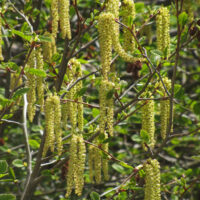
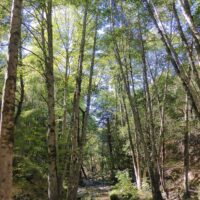
Alnus rhombifolia
From creeks and rivers throughout California, the white alder rapidly grows to become a large tree, reaching to 50 ft. or more at maturity. Serrated green leaves produce an excellent canopy above the straight, silvery-gray trunk. In winter, when the leaves have fallen, the ghostly branches make a striking silhouette with dangling catkins from the branch tips. An excellent plant for creek restoration where its aggressive roots help to stabilize banks. Keep away from irrigation pipes and foundations. Needs regular moisture and sun to light shade.
Anaphalis margaritacea
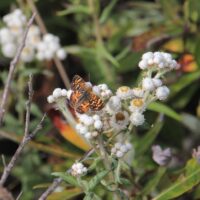
An adaptable plant with silver-green leaves that are densely white and woolly beneath. The flowers appear in summer and are made up of pearly white papery bracts surrounding yellow centers. The “straw flowers” retain their shape and color and are often used in dried arrangements. Tolerant of almost any soil type, it prefers full sun where it will grow in moist to somewhat dry conditions. Can spread vigorously, perhaps best used in meadow plantings or other naturalistic settings. Grows 1 - 3 ft. tall and spreading. Dies back to the ground in the winter. Larval food source for the painted lady and American lady butterflies. Deer resistant.
Anemone deltoidea
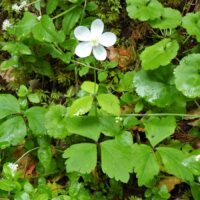
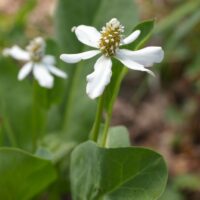
Rhizomatous perennial native to coniferous forests in the coastal mountains of Northern California through Washington. Forming low colonies, 6 inches or so tall with slender stems holding three leaflets. Simple, pure white flowers with a central shaft of anthers hold themselves just above the foliage. Spreads vigorously and best used with shrubs, ferns or other sturdy subjects. Can romp over smaller perennials. Sweet addition to the woodland garden where it will grow in full to part shade with regular to a occasional summer watering. Good in containers too. Dies back to the ground in winter.
Anemopsis californica
An unusual plant - native to wet areas, but adaptable to regular or moderate garden water. The low rosettes of leaves spread into attractive colonies. The white flowers, or actually, flower bracts, are very showy in late spring. Sun to light shade with moisture. Herbalists use roots and leaves for a topical antibiotic and other uses.
Angelica arguta
A remarkable form of this native mountain Angelica with striking bluish-gray foliage. Umbrella-shaped clusters of white flowers sit on stalks up to 6 feet in height. Needs moderate irrigation and dappled shade inland. Combine with native Heleniums, lilies and columbines to create a beautiful woodland flower patch. Great for native pollinators. A larval food source for the anise swallowtail butterfly.
Angelica breweri
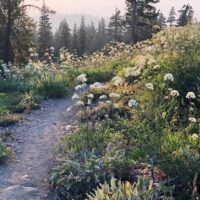
From the Sierras and the Klamath mountains comes this elegant member of the carrot family. Clear white flowers perch like little stars in flat-topped clusters up to 10 inches wide. Flower stalks can reach 6 feet in height with green serrated leaves forming 2 foot tall mounds at the base. Enjoys dappled shade away from the coast and moderate water. Great for native bees and butterflies. A larval food source for the anise swallowtail butterfly.
Angelica capitellata
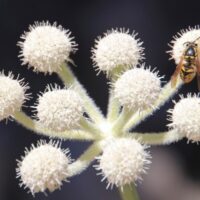
We are excited to offer this denizen of mountain meadows and forests known for its clusters of white flowers or “buttons” on tall stalks reaching up to 5 feet in height. Lance-shaped leaves of bright green form upright mounds at the base of the stalks. Ranger buttons are easily identified by the hairy stems within the inflorescences. Provide regular water and dappled shade. This unusual member of the carrot family combines beautifully with ferns, lilies and other forest dwellers.
Angelica hendersonii
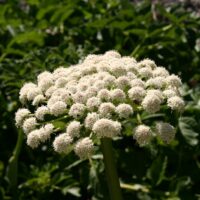
Found in nature on the immediate coast, though well adapted to the watered inland garden. It has the overall look of a stout cow parsnip with creamy white flowers in umbels and pinnately compound leaves of a deep green. Like many umbels, it is a good nectar source for beneficial insects. 4 - 6 ft. tall. Full sun to light shade. Good drainage with moderate summer water.
Angelica lucida
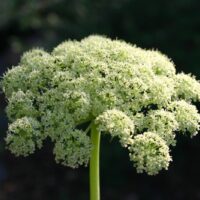
Large white flower clusters up to one foot across are held on stalks up to 5 feet tall above coarsely dissected leaves. Greener leaves and a more refined character distinguish this species from the more common Angelica hendersonii. While it is rare on the sea cliffs of northern California, sea-watch has a large distribution along coasts throughout the northern hemisphere. Give regular moisture and part shade in areas away from the coast. Attracts bees and butterflies.
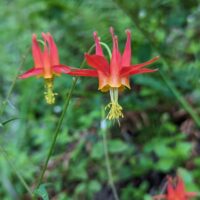
Aquilegia formosa
A popular native perennial with fern-like foliage and wonderful, nodding, spurred blossoms of red and yellow. Best with a little shade and moderate to regular moisture, but will tolerate full sun in somewhat cooler climates. The flower stalks reach 1 1/2’ to 3’ tall, with the grey-green foliage forming a mound of about 1 ft tall and wide. Flowers attract hummingbirds, while the seeds are relished by small birds such as sparrows and Juncos. If seed pods are left on the plants, you may get volunteer seedlings in the fall.
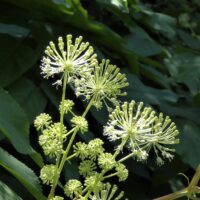
Aralia californica
A striking and dramatic native perennial for shady areas with regular water. The elk clover boasts tropical looking foliage 4 - 8 ft. tall with stalks of white, ball-like flower clusters followed by purple berries. In the autumn the foliage turns yellow and dies to the ground, returning with exuberance in the spring. Birds relish the fruits. Deer resistant.

Aristolochia californica
Dutchman’s pipe vine is an interesting vine native to river, stream side and woodland habitats. Soft heart-shaped leaves and unusual purplish pipe-shaped flowers bloom in early spring. This deciduous twining plant will need some support if you wish it to grow upwards. Adaptable, but best with a little shade and moderate water. Slow to establish, we offer this adage to encourage patience: “The first year it sleeps, the second year it creeps and the third year it leaps”. Once established it will put on ample growth, easily covering a trellis or chain link fence. THE larval food source for the pipevine swallowtail butterfly. Deer resistant.
Arnica chamissonis
Native to moist meadows in mountainous regions of California and western North America. This delighful perennial grows 1 - 2 feet tall and wide with cheerful, bright golden-yellow daisies in early summer. The bright green, lance-shaped leaves sit in opposite pairs along them stems. Grow in full sun to light shade with decent draining soils and regular moisture. Said to have the same medicinal properties of its European cousin, but easier to grow. Flowers support bees, bumblebees and butterflies. Winter deciduous. Deer resistant.
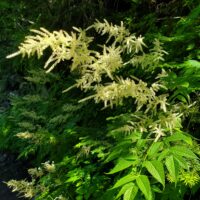
Aruncus dioicus
Native to stream sides and moist woods from Mendocino County, California north to Alaska. A bold and showy perennial looking like a giant astilbe. Forms dense clumps of finely divided foliage with arching, feathery plumes of white flowers 3-5 ft. tall in summer. Requires regular moisture and part shade where it makes a striking specimen or accent plant in the woodland garden. Dies back to its roots in winter. The frothy flower plumes attract an array of tiny little pollinators and the seed heads on female plants are an important food source for birds. Said to be deer resistant.
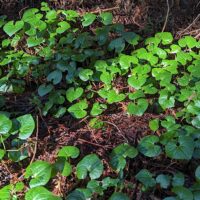
Asarum caudatum
Native to the deep shade of forest floors, this evergreen perennial forms a handsome low groundcover. The large, deep green, heart-shaped leaves appear to hover over the ground, creating a lush, almost tropical effect. The unusual flowers which nestle under the leaves are normally maroon, but occasionally white, with long spidery tails. Thrives in the deep shade under redwoods, competing well with the aggressive roots and dense duff. The ginger scented leaves are deer resistant.

Asarum caudatum ‘Alba’
An interesting form of the native, shade loving wild ginger. Calling the flowers white is a stretch, they are more of a wasabi-green rather than the usual maroon color of the species. The intriguing long tailed flowers are hidden beneath the glossy heart shaped leaves and would need to be planted on a wall, slope or container to make them easier to view. Wild ginger prefers shade and moisture where it will form a low spreading groundcover.